

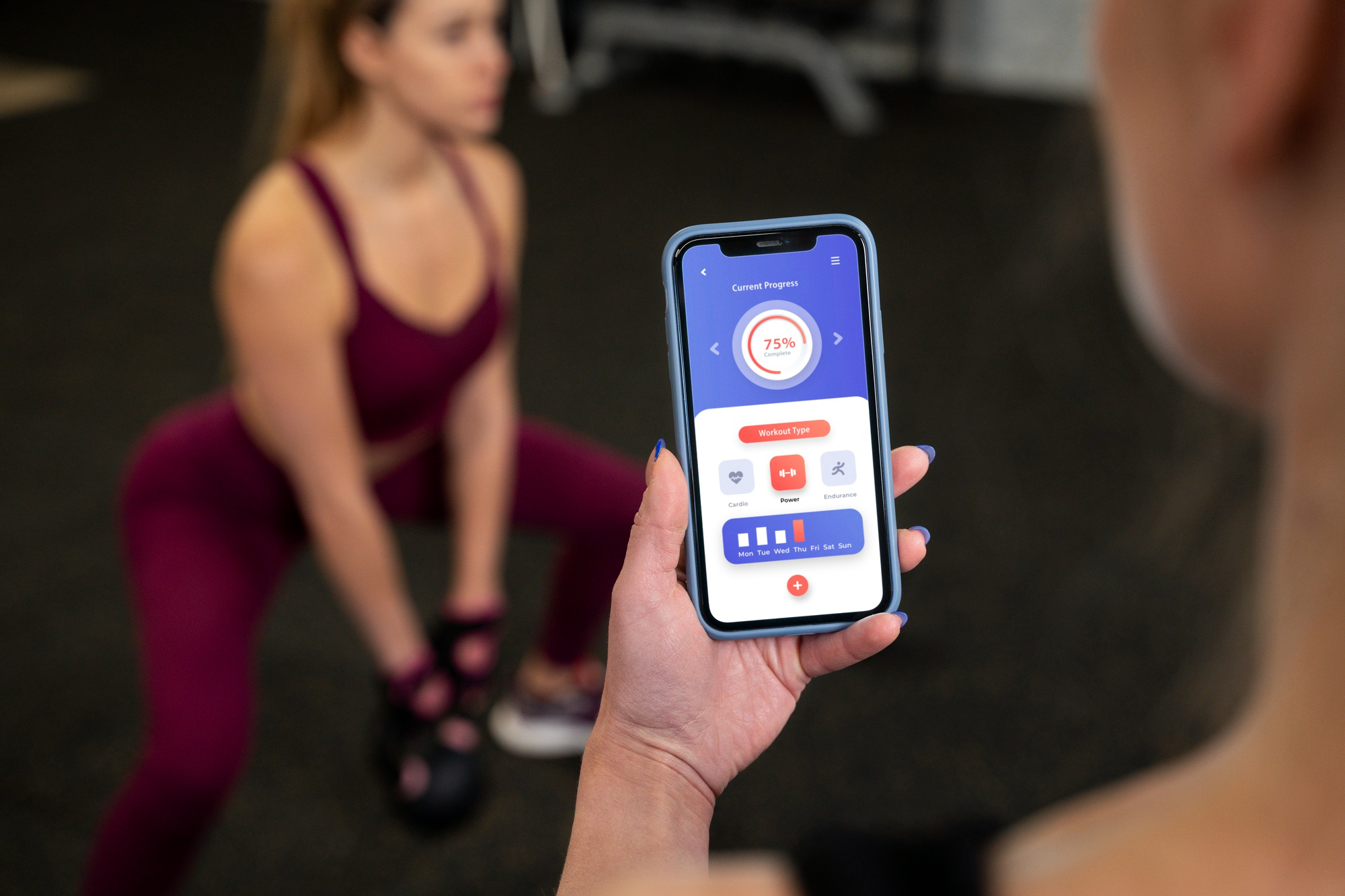
Fitness tracker technology is now the most important part of modern health, and it is changing how individuals think about their daily activity, sleep quality, heart rate patterns, and long-term health habits. This essay starts with a strong and straightforward point: Most consumers believe their fitness trackers, even though they don’t know how they really work.
You should know the science behind the figures if you are using a wrist-worn device to track your calories, stress, recovery, or sleep. This complete guide will teach you all you need to know about how wearable technology collects your data, how algorithms interpret it, how artificial intelligence improves accuracy, the privacy issues you should be aware of, and what the future of this technology means for fitness fans. Please leave a comment at the conclusion of this post and tell us what you think.
Fitness trackers have come a long way since they were just step counters. Today’s technologies use machine-learning algorithms, multi-layered sensor fusion, and occasionally AI built into the device to make detailed health reports. This article will talk about how sensor fusion works in fitness trackers, including how several sensors work together to give accurate findings. You will also learn about how wearables handle deeply personal biometric data and how fitness tracker technology and artificial intelligence work. Before we move on, please leave your thoughts in the comments so we can keep talking.
Fitness tracker technology uses a mix of sensors, complex algorithms, motion-pattern analysis, and more and more artificial intelligence. When you first start to learn about this technology, you should know that accuracy is never relied on just one sensor. It is done by using a group of data points that work together to track things like acceleration, blood flow, little movements, the weather, recovery signals, and more. This article goes into great detail on these parts to help you understand why your fitness tracker operates the way it does.
Comprehending the Fundamental Sensors in Fitness Tracker Technology
Sensors are the first step in fitness tracker technology. These sensors can pick up on changes in the environment, movements, and bodily parameters. The accelerometer, gyroscope, and optical heart rate sensor are still the primary parts. The accelerometer can tell if you’re walking, running, sleeping, or standing motionless by measuring how you move in different directions. The gyroscope makes it easier to detect movement by knowing how your wrist is rotating and where it is pointing. When used together, these sensors let wearables recognize certain movement patterns, which is necessary for counting steps and sorting activities.
Photoplethysmography is how optical heart rate sensors work. They beam green LED light on the skin to see how the blood flow changes. The sensor looks at these changes to figure out the heart rate and then uses that information to figure out the stress level, VO2 max predictions, and recovery time. Many high-end trackers come with other sensors, including ECG, skin temperature, SpO₂, barometers, and EDA sensors. These pieces of information are all used to give a more accurate daily health check.
How Sensor Fusion Makes Things More Accurate
To really grasp how sensor fusion works in fitness trackers, you need to recognize that no sensor is 100% accurate on its own. Sensor fusion makes it possible for several sensors to function together as one system. The device, for instance, gathers raw heart rate readings, motion readings, temperature changes, and skin contact data and combines these to figure out what the activity is.
To get rid of spurious motion detection, sensor fusion algorithms employ arithmetic to represent things. This is especially useful while lifting weights or riding a bike. When increased sensor fusion is applied, trackers can tell the difference between steps, cyclic motion, and random hand movements. This is one of the main reasons why contemporary trackers are far more accurate than first-generation ones.
How AI Is Used in Today’s Fitness Trackers
AI has changed the way we track our fitness in a big way. When it comes to fitness tracker technology with AI features, AI improves pattern recognition and lowers the number of mistakes that happen when movements aren’t consistent. However, AI learns how your body works and changes its statistics over time to fit your particular physique. This makes it easier to keep track of calories, get workout suggestions that are right for you, and analyze your sleep in a way that changes over time.
Moreover, AI also makes predictive modeling possible, which lets wearables guess how tired you are, how well you can recover, and how well you can perform. Some trackers employ AI to find arrhythmia, find abnormal breathing when you sleep, and look at patterns in your stress levels. Additionally, AI gets smarter and more tailored with each upgrade and new data set.
AI makes analytics better, but it also makes people rely more on their own biometric data, as a result, it raises privacy issues that everyone should be aware of.
Concerns about privacy and data security in fitness tracker technology
As fitness tracker technology gets better, privacy and data security issues with fitness trackers become more and more important. Furthermore, Fitness trackers keep private information, including heart rate, sleep patterns, activity habits, location, and sometimes even recordings of menstrual cycles. Companies may use this information to do market research, personalize their products, or create profiles of people.
It’s important to know where your data travels. Some businesses keep their data on cloud servers, while others merely process it on devices to protect privacy. Before synchronizing your data with apps from other companies, you should check the privacy policy. A lot of people don’t know that they are sharing health data with advertising companies and fitness partners, which can hurt their online identity.
Algorithms: The Real Power Behind Smart Wearables
The sensors only collect data that isn’t processed. The algorithms are what really interpret the data. Sweat, activity, and exposure to light from outside do not affect heart rate readings because of algorithms. They also use algorithms based on your age, weight, height, gender, and heart rate variability to figure out how many calories you burn. Algorithms can tell if you’re awake or asleep, what stage of sleep you’re in, and if your heart is under stress.
Activity classification is one of the parts that uses the most algorithms. The device needs to know if you’re jogging, rowing, cycling, lifting weights, or even just relaxing. Algorithms can guess these activities with more and more precision by looking at patterns of motion, muscular tension, and heart rate changes.
These algorithms are the invisible engine that powers your fitness tracker every second.
How accurate are fitness trackers really?
Different devices have different levels of accuracy. When doing regular cardio workouts, trackers are ideal at keeping track of your heart rate. They may have trouble with hard interval exercise, strength training, or moving their arms quickly. How tightly you wear the device, how you swing your arm, and how often you do hand movements that don’t involve walking all affect how accurate the step count is.
To make things more accurate, manufacturers are adding additional sensors, using AI to calibrate them, and relying heavily on sensor fusion. Even still, no tracker is perfect, and knowing what they can’t do will help you use yours better. This is one reason why professional athletes often use more than one gadget, including chest straps and wrist-based trackers.
Expert Opinion: Advice from an expert in wearable technology
Experts in wearable technologies agree that fitness trackers will get better in the future by using AI more and better sensor fusion. A biometric engineer calls today’s trackers “mini health laboratories strapped to your wrist.” He says that soon, wearables will be able to detect problems in real time thanks to a combination of ECG, optical sensors, and powerful machine learning. He says that the accuracy of trackers is getting better, but it depends a lot on how often consumers wear the device. The most important thing that makes your data really valuable over time is how consistent it is.
Conclusion
Fitness tracker technology has come a long way. It now uses sensors, algorithms, and AI to provide you with very specific health information. You can better understand your health data if you know how these gadgets track your steps, heart rate, sleep, and calories. Modern trackers are getting smarter and more trustworthy because of sensor fusion, AI-driven insights, and constant algorithm advancements. However, privacy is still a crucial issue for users to think about.
Please leave a remark if you have any thoughts or experiences with wearable technology. Your comments help the conversation grow and encourage other readers to engage in meaningful discussions.
Leave A Comment
You must be logged in to post a comment.